

Programmable Money Changes Everything
Money isn’t just faster. It’s conditional now.

Note: This post grew out of my 2026 predictions, where I began imagining a world in which apps quietly fade away and mobile devices evolve into vaults for our agents. Credit where it’s due: my AI avatar helped untangle my thinking, trim the verbal underbrush, and turn a long rumination into something marginally more readable.
____________________________________________________________________________
The Old World: Slow, Dumb, and Comfortably Human
For most of human history, money was gloriously uncomplicated. You earned it, stored it, sent it. It moved slowly, asked no questions, and when something went wrong, humans stepped in—usually late, occasionally wisely, and always with paperwork. That mental model is quietly collapsing. Money is no longer just moving faster; it’s starting to behave differently. It’s becoming programmable. And once money executes logic instead of merely changing hands, finance stops being a utility and starts acting like software.
Speed Was the Warm-Up Act
Speed matters—but it’s not the revolution. Faster rails only unlock what comes next. The real shift happens when money doesn’t move after a decision, but moves because a condition was met. Think less “send funds” and more “execute outcome.”
What changes when conditions trigger movement?
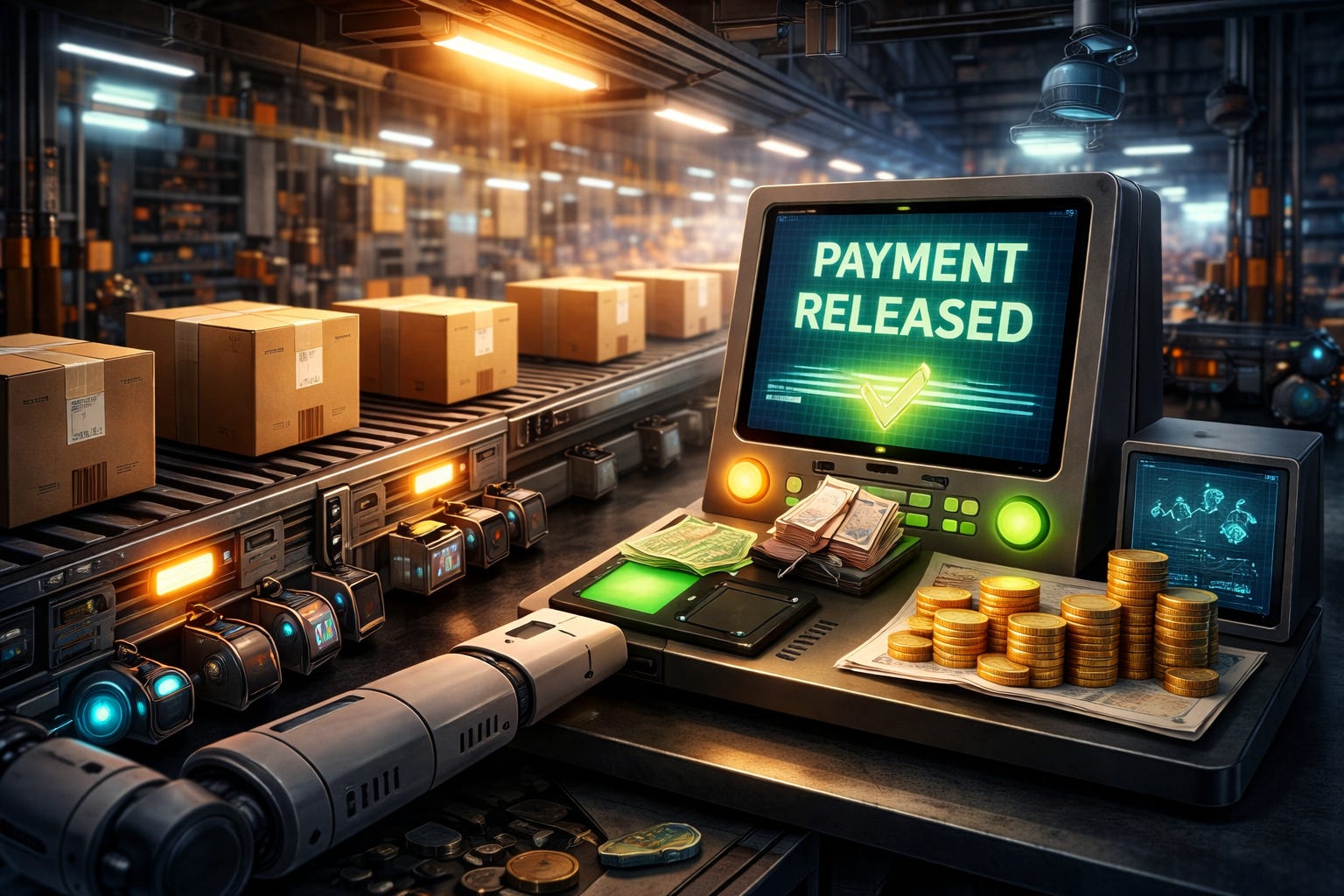
Goods arrive → payment releases
Work verified → revenue splits automatically
Risk spikes → funds pause mid-flight
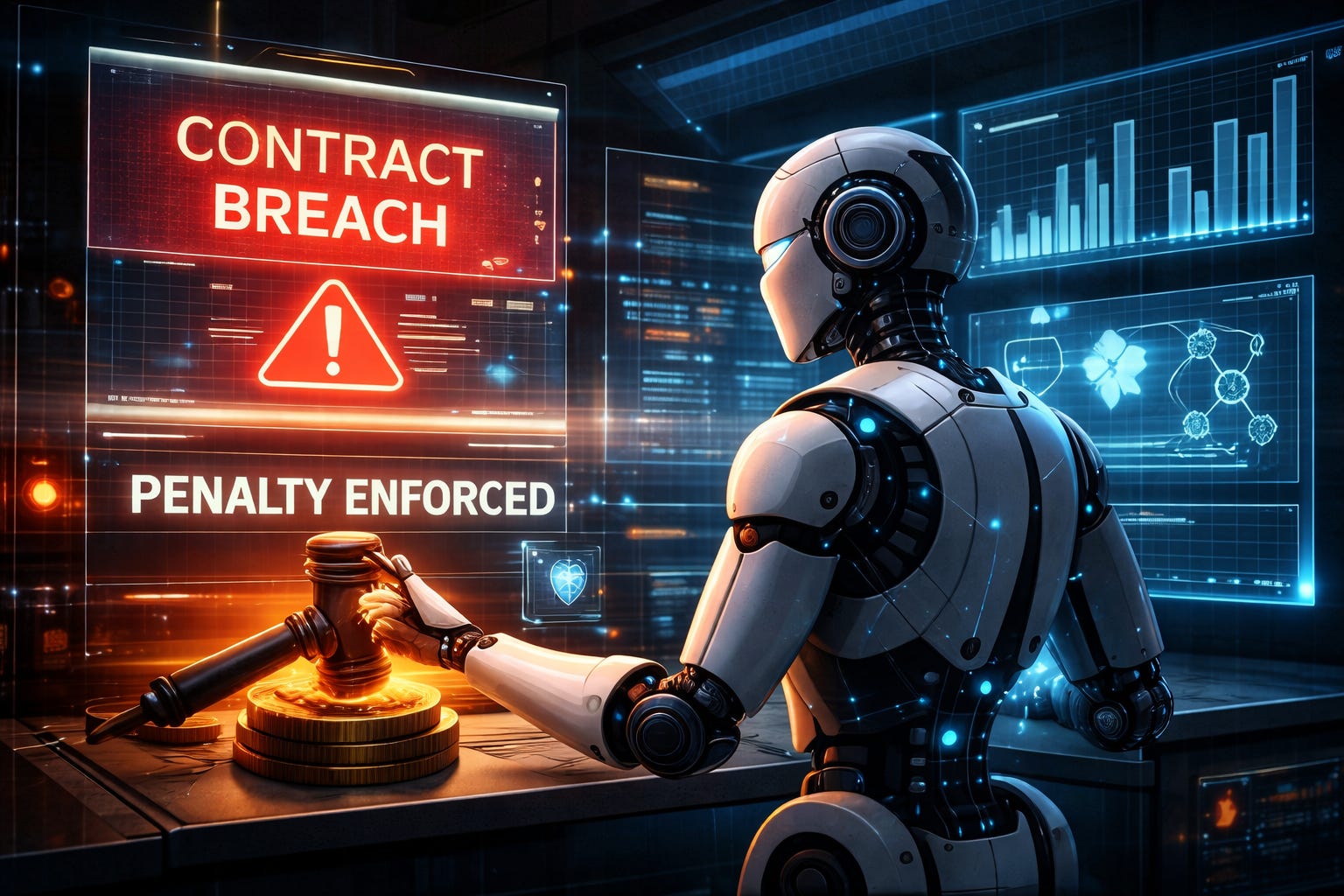
Contract breached → penalties enforce themselves
No email chains. No PDFs. No “please see attached.” The logic fires. The money follows.
From Objects to Interfaces
Once money becomes programmable, it stops behaving like a “thing” and starts behaving like an interface. You don’t merely send it anymore—you invoke it. Money begins to look suspiciously like an API, complete with inputs, logic, outputs, and observability.
Under the hood, programmable money brings:
Inputs: identity, context, constraints
Logic: rules, limits, workflows
Outputs: settlement, partial execution, refusal
Observability: logs, audits, replay
This is why fintech increasingly feels less like app design and more like infrastructure engineering. The UI still matters—but the leverage lives underneath, where logic meets liquidity.
Escrow Was Just Training Wheels
We already tolerate early versions of programmable money without blinking: escrow, subscriptions, installments, revenue splits. These are the on-ramps. The next phase is more powerful—and more unsettling.
What’s coming looks like:
Payments that reroute themselves when supply chains break
Funds that dynamically choose the cheapest or fastest rail
Contracts that self-enforce financial consequences
Transactions negotiated by agents, not humans
At that point, money isn’t following instructions. It’s following policy. And policy, once embedded in code, executes whether you’re ready or not and most of the times, it will be AI agents interpreting the policies for optimal choices.
Risk Moves Into the Transaction
One of the quiet revolutions here is when risk decisions happen. Historically, risk lived downstream: transact first, analyze later, recover if you’re lucky. Programmable money pulls risk forward into the transaction itself. Identity, context, and behavior are evaluated in real time. Funds release conditionally—or not at all.
Risk becomes:
In-flight instead of post-mortem
Continuous instead of episodic
Preventive rather than reactive
That’s fantastic for fraud prevention. It’s less fantastic if your business model depends on opacity or cleanup crews.
Enter the Agents (Things Get Weird—in a Good Way)
Now add AI agents to the mix. Once agents can hold wallets, understand contracts, evaluate trade-offs, and negotiate on your behalf, money stops being something you personally operate. You approve intent and constraints; the agent executes continuously.
The shift looks like this:
You don’t check balances—your agent does
You don’t approve every payment—you approve rules
Pricing becomes negotiated by software
Financial decisions happen constantly, in the background
At that point, programmable money stops being fintech and starts becoming economic infrastructure for autonomy.
What Breaks (Because Something Always Does)
Let’s be honest. This isn’t all upside. When money executes logic, bugs aren’t embarrassing—they’re expensive. Humans are no longer always in the loop. “Undo” becomes complicated. Policy mistakes scale instantly.
This is where the unglamorous parts matter:
Governance
Auditability
Kill-switches
Human override paths
If money is software, then financial outages are production incidents. And nobody wants a postmortem that starts with, “So… the money decided to do a thing.”

Who Wins, Who Struggles
Winners tend to be builders who understand systems, not just screens. Platforms that absorb complexity instead of pushing it onto users. Small businesses that get automation without losing control. Consumers—if the control surfaces remain humane. Agents, inevitably, because they’re built for exactly this environment.
Strugglers? Anyone betting that finance can remain slow, manual, and opaque while everything else becomes instant, automated, and policy-driven.
The Shift That Actually Matters
Programmable money isn’t really about crypto versus banks. It isn’t about rails. It isn’t even about speed. The real shift is simpler—and more uncomfortable:
Money is becoming logic-bearing infrastructure.
Once that happens, finance stops being a sequence of transactions and starts behaving like a living system of rules, agents, and outcomes. The question is no longer whether we can move money faster. It’s who gets to define the rules that money follows. That’s not a technical question. That’s a power question. And like most power shifts, it’s already happening—quietly, incrementally, and without waiting for permission.
(Next up: what happens when programmable money collides with programmable identity—and why that combination makes lawyers nervous and builders giddy and David G.W. Birch super happy.)