

The Third Category
There’s a strange thing happening in tech right now.

You can feel it in conference hallways, LinkedIn posts, executive meetings, and late-night Slack threads where everyone is simultaneously excited, terrified, and pretending to have a clearer roadmap than they actually do.
AI is no longer a future discussion. It’s operational now. It’s inside product roadmaps, customer support flows, compliance reviews, engineering velocity discussions, hiring freezes, and budget planning. And this was the in-your-face thread in the majority of discussions at Fintech Week SF organized by the Financial Club and Alek Pelin.
And yet, most of the conversation still feels oddly superficial.
A lot of what passes for “AI expertise” today is really prompt engineering theater. You’ve seen it. Giant glowing neon brains in social posts. Screenshots of chat windows treated like revolutionary breakthroughs. People claiming their toaster has become sentient because it can summarize a grocery list in bullet points.
Meanwhile, the real shift is happening somewhere else entirely.
The field is quietly splitting into three categories.
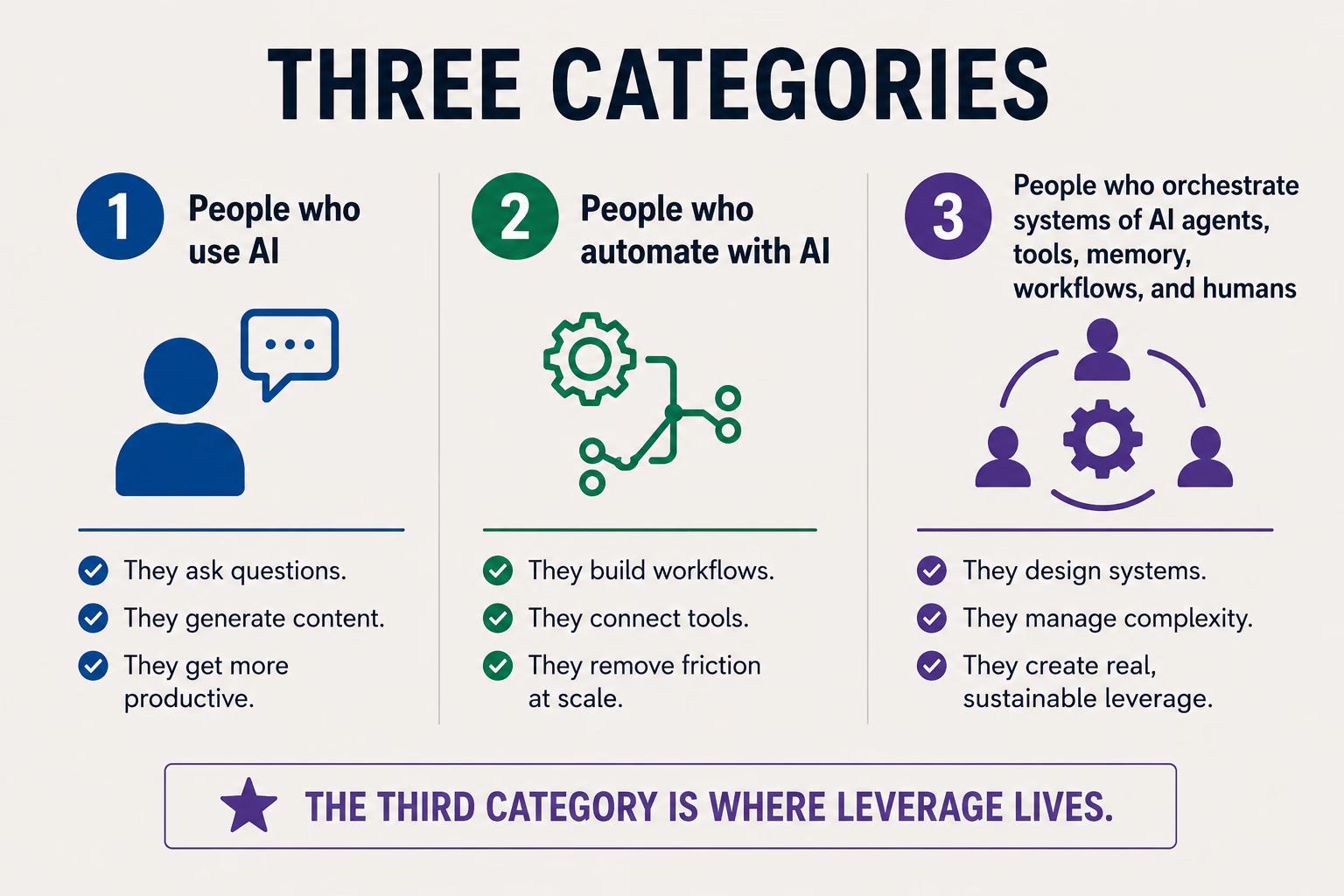
The first category is people who use AI.
They ask ChatGPT questions. They generate summaries. They create images. They automate small repetitive tasks. They’re becoming more productive, and that matters. Every knowledge worker should probably be doing this already.
The second category is people who automate with AI.
These are the builders connecting workflows together. They use tools, APIs, retrieval systems, memory layers, automations, and integrations to remove friction from operational work. They build assistants, copilots, internal productivity systems, and lightweight agents that can execute narrow tasks reliably.
This group is already creating significant leverage.
But the third category is where the real power is emerging.
The third category is people who orchestrate systems of AI agents, tools, workflows, memory, governance, and humans.
That’s the layer most people still don’t fully see.
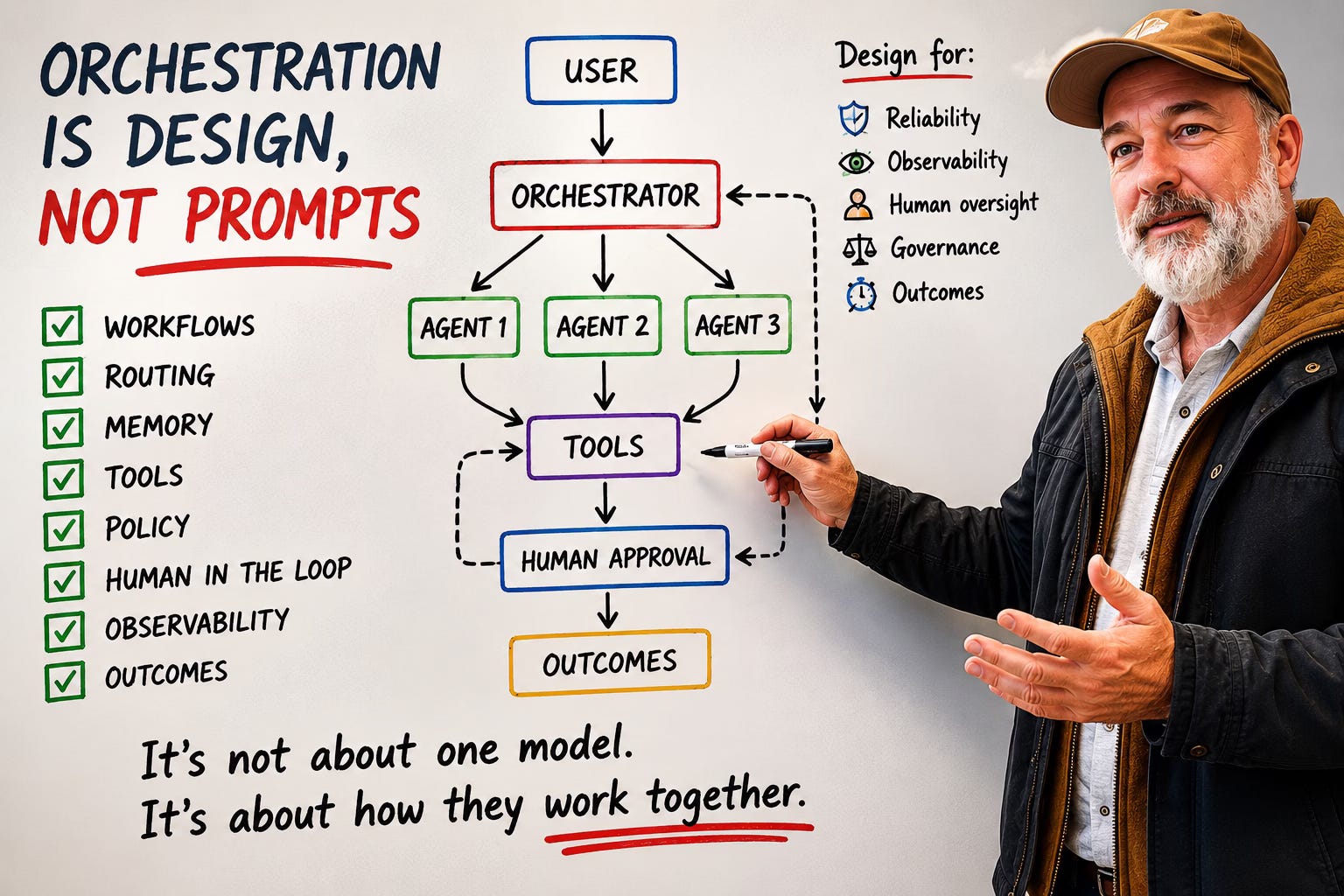
Because orchestration doesn’t look magical at first glance. It looks operational. Messy. Architectural. Full of edge cases, retries, permissions, observability, escalation paths, state management, and policy enforcement.
It looks suspiciously like distributed systems engineering collided headfirst with product delivery operations.
Which is exactly what happened.
The irony is almost funny. For years, Silicon Valley glorified the myth of the lone engineer building world-changing systems from a coffee shop while everyone else was told process was the enemy. Now companies are discovering that once AI systems begin interacting with real customers, regulated environments, financial systems, legal obligations, and production infrastructure, orchestration suddenly matters more than raw generation.
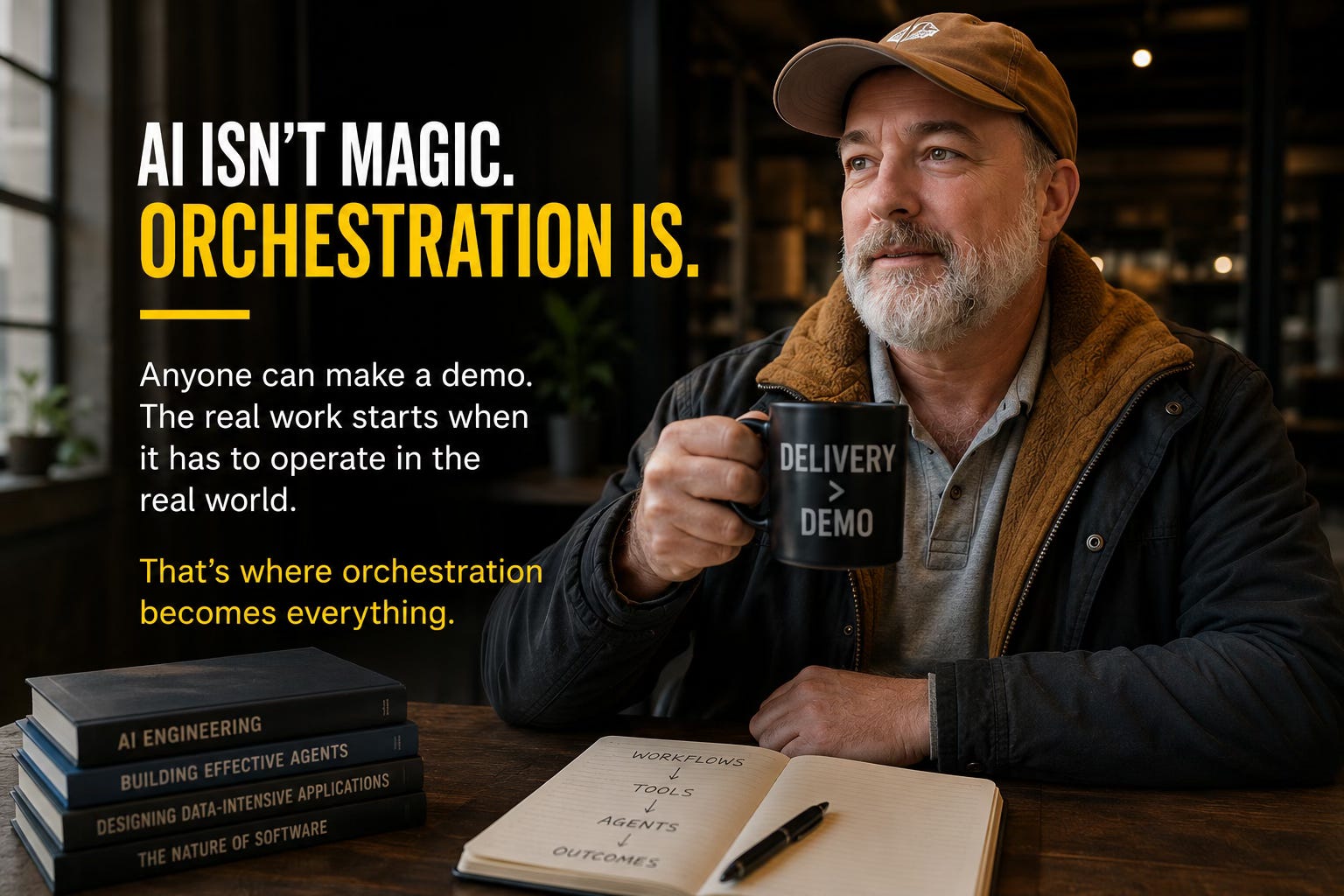
Anyone can make a demo.
The hard part starts after the demo works.
What happens when the agent calls the wrong tool?
What happens when the retrieval layer returns conflicting information?
What happens when two agents disagree?
What happens when regulations change?
What happens when the model hallucinates inside a compliance workflow?
What happens when a customer escalates?
What happens when the AI confidently creates a disaster at machine speed?
That’s where orchestration begins.
And this is why I suspect experienced operators may become more valuable over the next five years than many people currently realize.
Not because they know every framework. Those will change every six months anyway. The graveyard of abandoned AI tooling is already starting to resemble a medieval battlefield after a particularly enthusiastic Scottish charge.
What matters is something else.
Judgment.
The ability to design systems where:
humans stay in control,
workflows remain observable,
escalation paths exist,
compliance can survive,
costs stay manageable,
trust remains intact,
and velocity doesn’t destroy reliability.
In other words, the future may belong less to people who merely “use AI” and more to people who understand how to orchestrate intelligence safely across systems, teams, and organizations.
That requires a very different mindset.
You stop thinking in prompts.
You start thinking in workflows.
You stop thinking about one model.
You start thinking about ecosystems.
You stop thinking about generating content.
You start thinking about routing decisions, memory, evaluation, fallback logic, approvals, and outcomes.
And eventually you realize something even more important.
The most valuable skill in the AI era may not be intelligence itself.
It may be coordination. Or orchestration. Or smart arrangement…of agents.
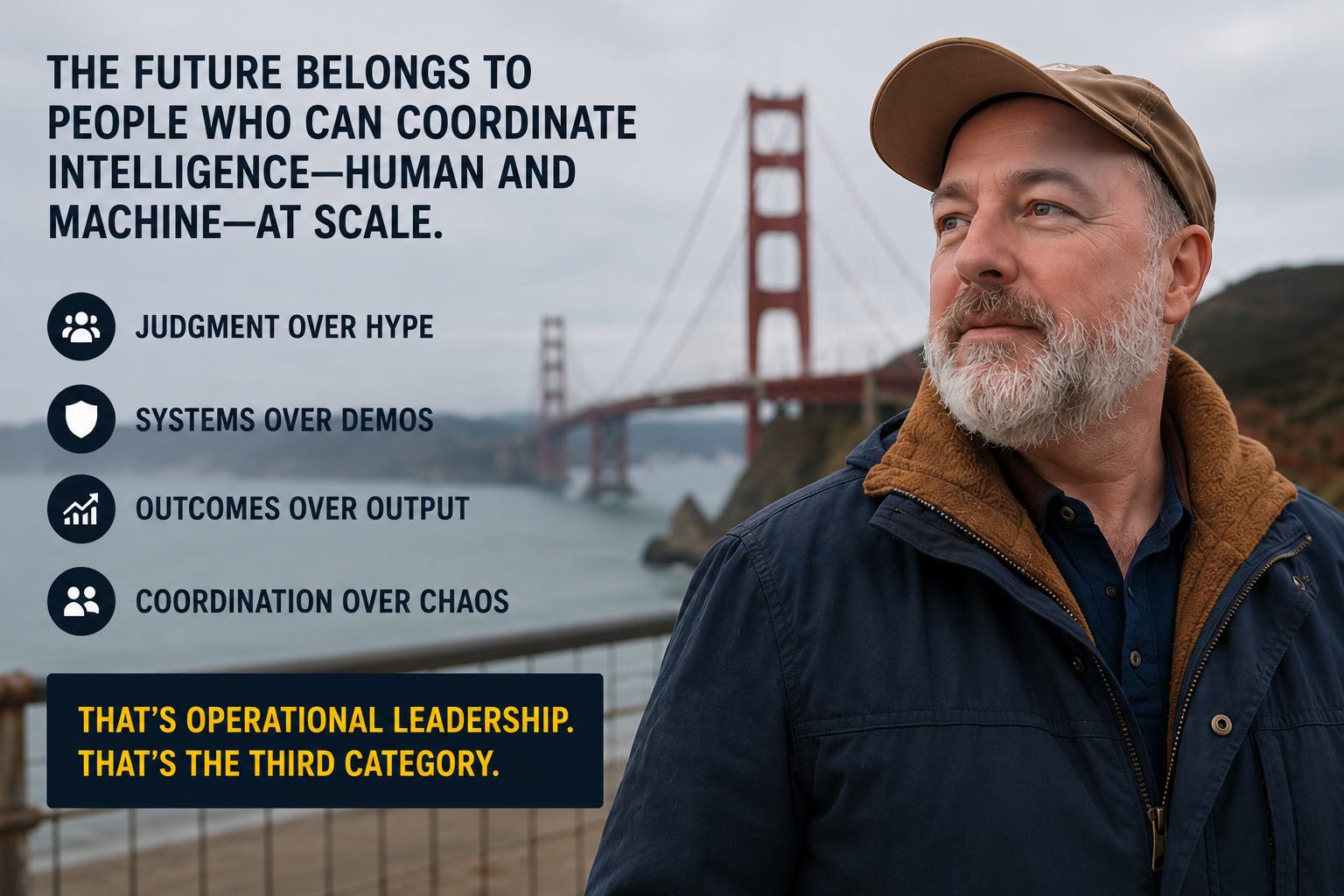
Because the companies that win over the next decade will not necessarily be the ones with the most powerful models. They’ll be the ones capable of orchestrating humans and machines together without collapsing under their own complexity.
That’s not prompt engineering anymore.
That’s operational leadership.
And I suspect a lot of old-school delivery people are about to become surprisingly relevant again.
Insights with a real SF atmosphere ✨