

The Unicorn Illusion
When Valuation Becomes a Substitute for Value


In venture capital, a “unicorn” is a privately held company valued at more than $1 billion. The term was originally meant to describe something exceptionally rare. Today, particularly in artificial intelligence, unicorns seem to appear almost overnight (as it was during Web3, NFTs, etc.).
AI company valuations are off the charts. We saw absurdly high valuations for OpenAI or Anthropic fillings. Funding rounds increasingly produce numbers that appear disconnected from the traditional measures used to evaluate established technology companies or publicly traded businesses. Revenue, margins, cash flow, customer concentration, defensibility and sustainable growth can become secondary considerations. Instead, valuations are often driven by expectations, competitive pressure among investors and the FOMO (fear of missing out) the next transformational company. And with AI crushing down the theory of defensible moats at every corner, some of these numbers may be right. But is it logical to have single companies valued as much as 10 or 20 well-established, publicly traded companies? When is market logic safeguard supposed to kick-in?
AI may indeed reshape entire industries, and some of today’s companies will undoubtedly justify their enormous valuations. But technological potential and durable business value are not the same thing.
A private funding-round valuation is not necessarily a reliable assessment of what the entire company is worth. It is the negotiated price attached to a particular transaction at a particular moment. That transaction may involve preferred shares, liquidation preferences and other protections unavailable to employees or ordinary shareholders. When relatively few shares are sold at a certain price, that price is then commonly applied to the whole company, even though the market has never tested whether the entire business could actually command that valuation.
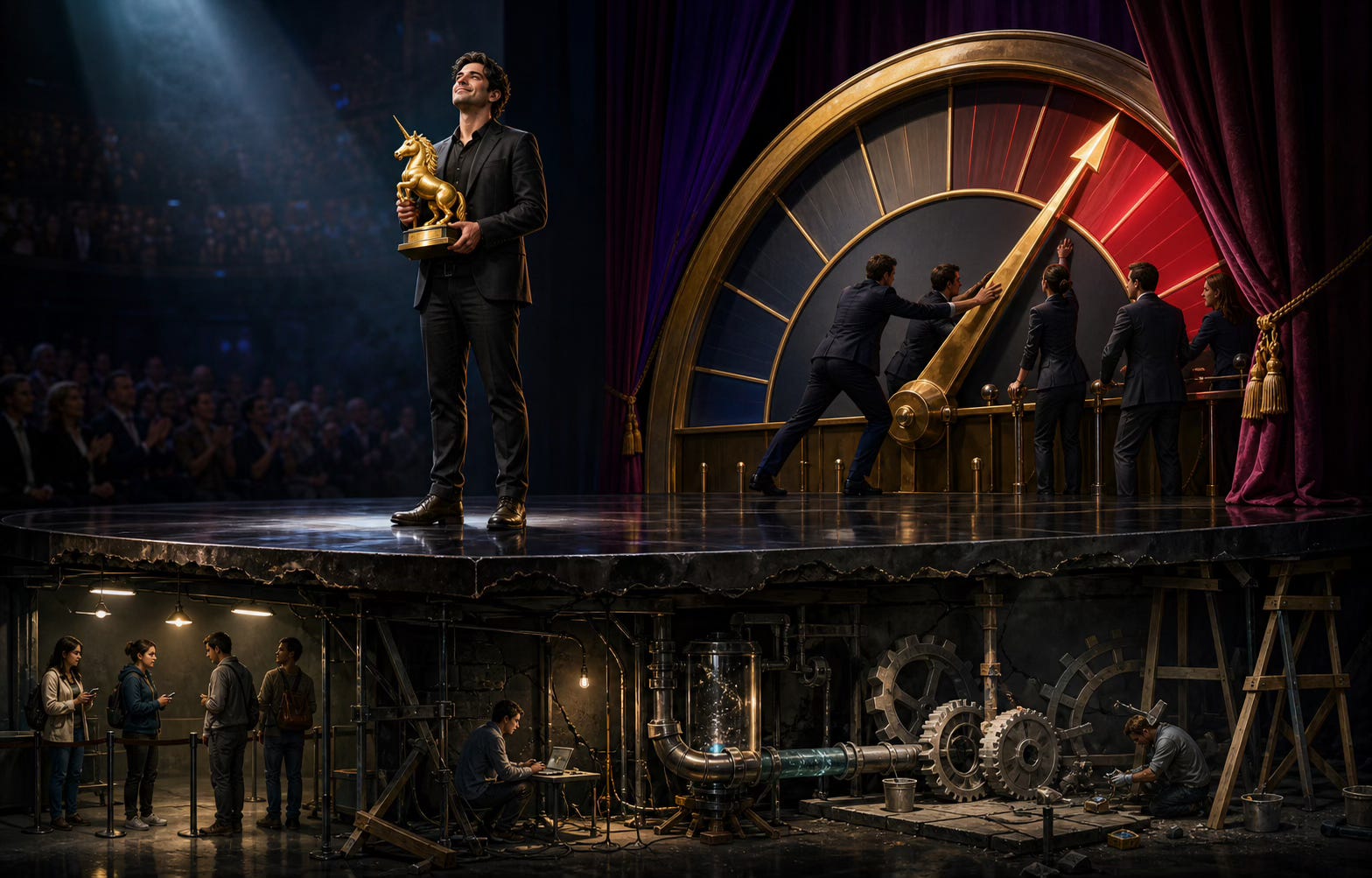
This is why I get annoyed when someone permanently introduces themselves as a “unicorn founder” simply because their company was valued above $1 billion during one funding round.
That valuation was a snapshot, not a lifetime title.
If the company eventually goes public, the broader market often imposes a far more demanding assessment. Investors examine its financial performance, growth prospects, margins, competitive position and ability to generate lasting returns. The result can be a significant realignment toward a more reasonable valuation.
Sometimes the supposed unicorn later falls below the billion-dollar threshold. Sometimes it is sold at a fraction of its earlier valuation. Sometimes it fails and ceases to exist altogether. Yet its founder may continue claiming to have founded a unicorn, as if a temporary financing milestone established an enduring business achievement. I even had a founder claiming to have created multiple unicorns. When I asked him how many were still growing, his embarrassed silence said it all. Out of the 3 unicorns he claimed to have created, none of them existed anymore. More a hit-and-run than value creation for investors.

Technically, the companies may have satisfied the conventional definition at one moment. But that definition says surprisingly little about the quality or longevity of the business.
There is an important difference between founding a company that once received a billion-dollar valuation and building a billion-dollar company.
The first can result from market enthusiasm, abundant capital, fashionable technology or aggressive investor expectations. The second requires execution over time. It requires customers who continue paying, products that solve meaningful problems, sound economics, competitive resilience and a credible path toward sustainable growth.
For me, a company deserves recognition for what it builds and sustains—not merely for the highest number once written into a financing announcement.
If a business does not demonstrate the capacity for long-term growth and a sustained improvement in its fundamentals, its valuation is little more than a pipe dream. A large number on a pitch deck or press release cannot replace revenue quality, operational discipline, customer value or a durable competitive advantage.

AI does not invalidate the principles of business. It may change products, markets and growth rates, but it does not eliminate the need to create lasting economic value. Eventually, every company must confront the same fundamental questions: Does the product matter? Will customers continue paying for it? Can the company grow efficiently? Can it defend its position? Can it survive when capital becomes less available and expectations become more realistic?
The true test of a founder is not whether investors briefly assigned the company a fashionable label. It is whether the founder created an organization capable of compounding value over many years and in different economical cycles.
A unicorn valuation may make a memorable headline.
A durable business makes a legacy.
✨ You are right, we need more long term view(s), for Unicorns, as for our global future …