

When the Future Stopped Waiting
AI has collapsed the distance between vision and proof—turning the people who imagine tomorrow into builders who can show it today.

For much of my career, being called a visionary was both flattering and mildly inconvenient.
It usually meant that I was talking about something people could not yet see.
In fintech, that was often the job. You looked five or ten years ahead and tried to describe a world in which money moved differently, identity was more portable, payments were embedded everywhere, and the phone in someone’s hand became more important than the branch on their street.
Then you went back to work and spent years building the plumbing.
You wrote the strategy. You found the partners. You argued with compliance. You explained the architecture. You convinced executives that the thing which did not exist yet would eventually become obvious. And then, slowly, painfully, through integrations, regulations, legacy systems, and the occasional meeting that could have been a carrier pigeon, you built it.
That was the old rhythm of innovation.
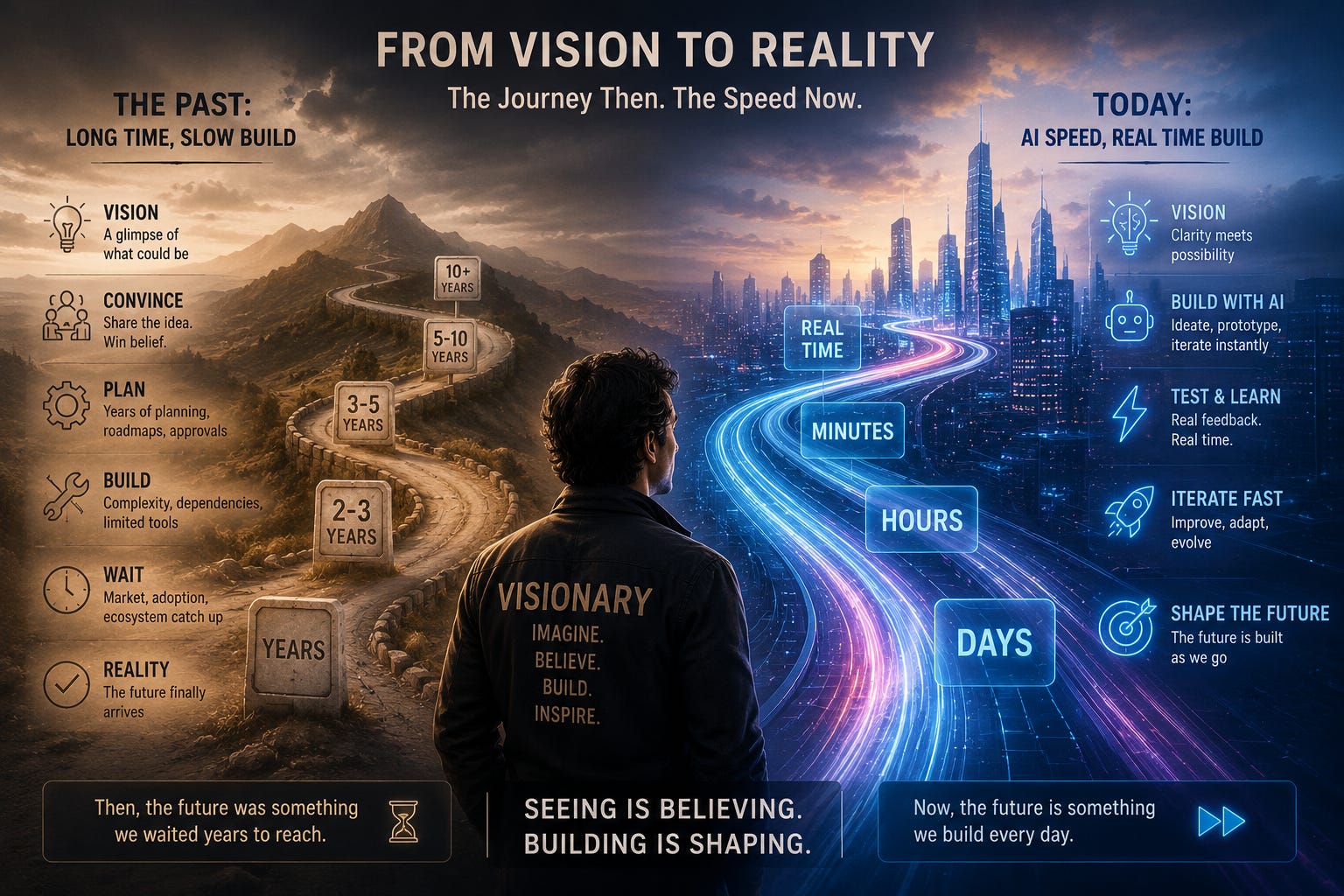
First came the vision. Then came the PowerPoint. Then came the skeptical committee. Then came the multi-year roadmap. Eventually, if you were lucky and stubborn enough, the future arrived roughly in the shape you had predicted.
I have spent much of my life as that kind of builder: a slow builder trying to accelerate the future.
Not slow because the ambition was small. Slow because the distance between imagining something and proving it was enormous.
You could see a new payment experience in your head, but showing it to someone required designers, engineers, legal reviews, data, security, partnerships, a budget, and enough patience to qualify for sainthood. The visionary had to sell a possibility before anyone could touch it.
That is changing.
The Future Is No Longer a Slide
AI has shortened the distance between “what if?” and “here, try it.”
A product leader can now describe a workflow and have a prototype by the afternoon. An engineer can turn a rough idea into a working service before the meeting that was meant to decide whether the idea deserved to exist. A small team can explore five versions of a customer experience, test assumptions, generate documentation, model edge cases, and build a credible demonstration in the time it once took to schedule the kickoff.
That does not mean the hard parts have disappeared. Payments still need trust. Financial systems still need controls. Regulation still matters. Reliability is still undefeated.
But the cost of making an idea visible has collapsed.
That matters because most resistance to innovation is not intellectual. It is experiential.
People do not always reject a future because they disagree with it. They reject it because it is abstract. They cannot picture the customer journey. They cannot see the risk controls. They cannot imagine the operating model. They cannot tell whether the thing is brilliant, dangerous, or merely another expensive way to rename a spreadsheet.
A working prototype changes the conversation.
Instead of saying, “Imagine a world where your small business cash flow can optimize itself,” you can show the business owner a real interface. Instead of arguing that an agent can reconcile a payment exception, you can let the skeptic watch it identify the issue, propose the next action, and explain the audit trail.
The vision becomes evidence.
And evidence has always been more persuasive than optimism.
Every Builder Is Becoming a Real-Time Builder
The old distinction between the visionary and the builder is getting less useful.
The visionary used to live ahead of the organization. The builder lived inside the constraints of the present. One imagined; the other delivered.
AI is pulling those two roles together.
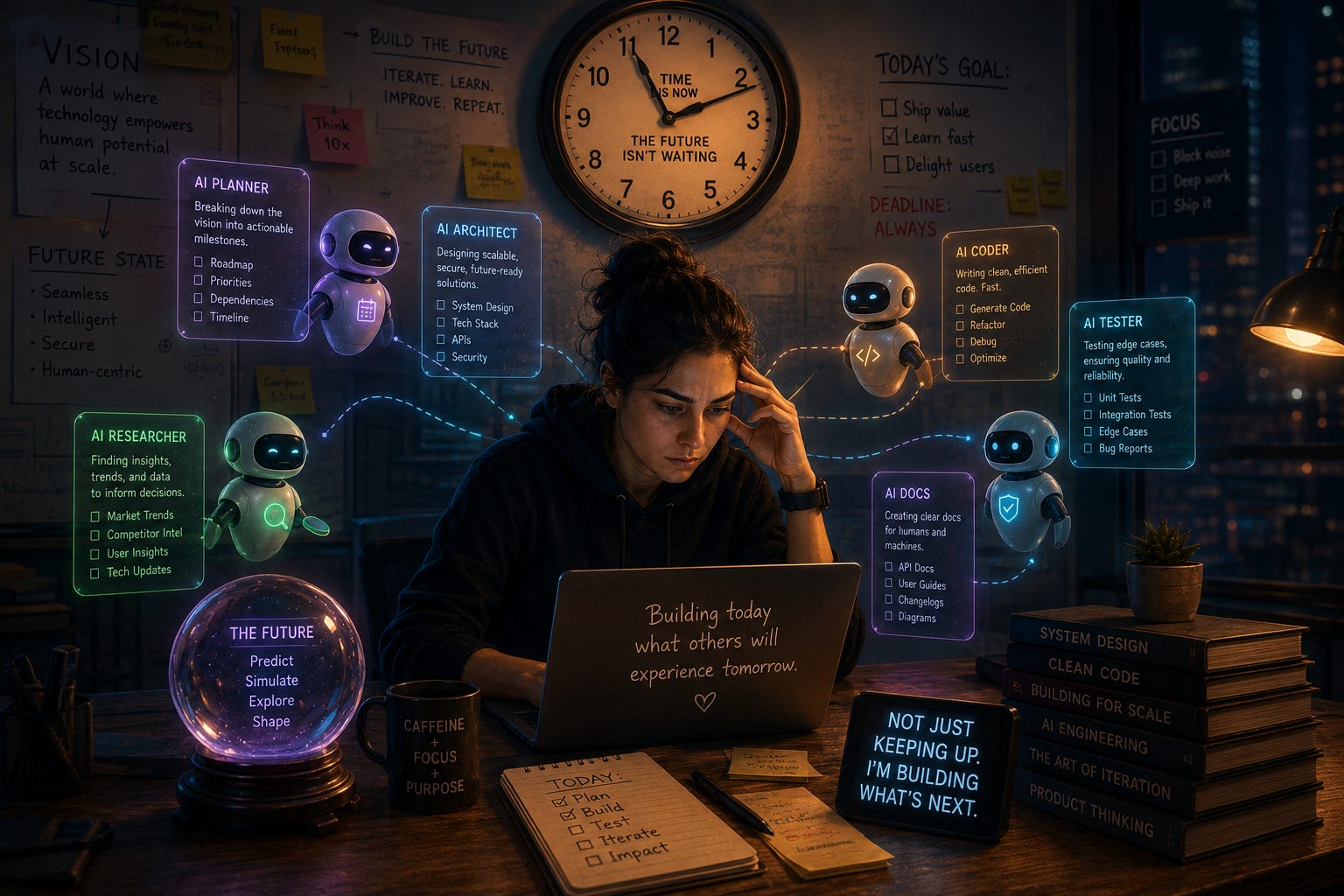
The person with a strong view of the future can now build enough of it to make the case. The engineer can now explore product possibilities without waiting for a full product cycle. The product manager can test a workflow before turning it into a quarter-long negotiation. The operator can simulate a new process rather than merely describing it in a memo with seventeen appendices and a brave little Gantt chart.
We are all becoming real-time builders.
That does not mean everyone suddenly becomes an architect, a security expert, or a product leader. It means the act of building is becoming more conversational, more iterative, and much closer to the moment of insight.
The advantage now belongs to people who can hold two ideas at once:
a clear view of where the world is going; and
the discipline to build, test, discard, and rebuild their way toward it.
Vision without execution remains theatre.
Execution without vision remains motion.
AI makes it possible to connect the two at a speed that would have felt absurd only a few years ago.
The New Advantage of the Visionary
This is where the word “visionary” becomes useful again.
A visionary is not someone who predicts the future with supernatural accuracy. If that were the definition, most of us would be reduced to reading tea leaves and pretending we understand cryptocurrency charts.
A visionary is someone who recognizes a direction before it becomes consensus.
In the past, that recognition had to survive a long delay before it could be tested. By the time the organization built the thing, the market might have moved, the technology might have changed, or the original insight might have been diluted into something safe enough to approve and bland enough to ignore.
Now the visionary can create a version of the future quickly enough to learn from it.
That is a profound change.
The first version may be wrong. It probably will be. But it can be wrong by Tuesday instead of wrong after eighteen months of roadmap execution. And once it is visible, it can be improved with customers, engineers, risk teams, partners, and even the skeptics in the room.
The skeptic is no longer being asked to believe a prophecy.
They are being asked to react to something real.
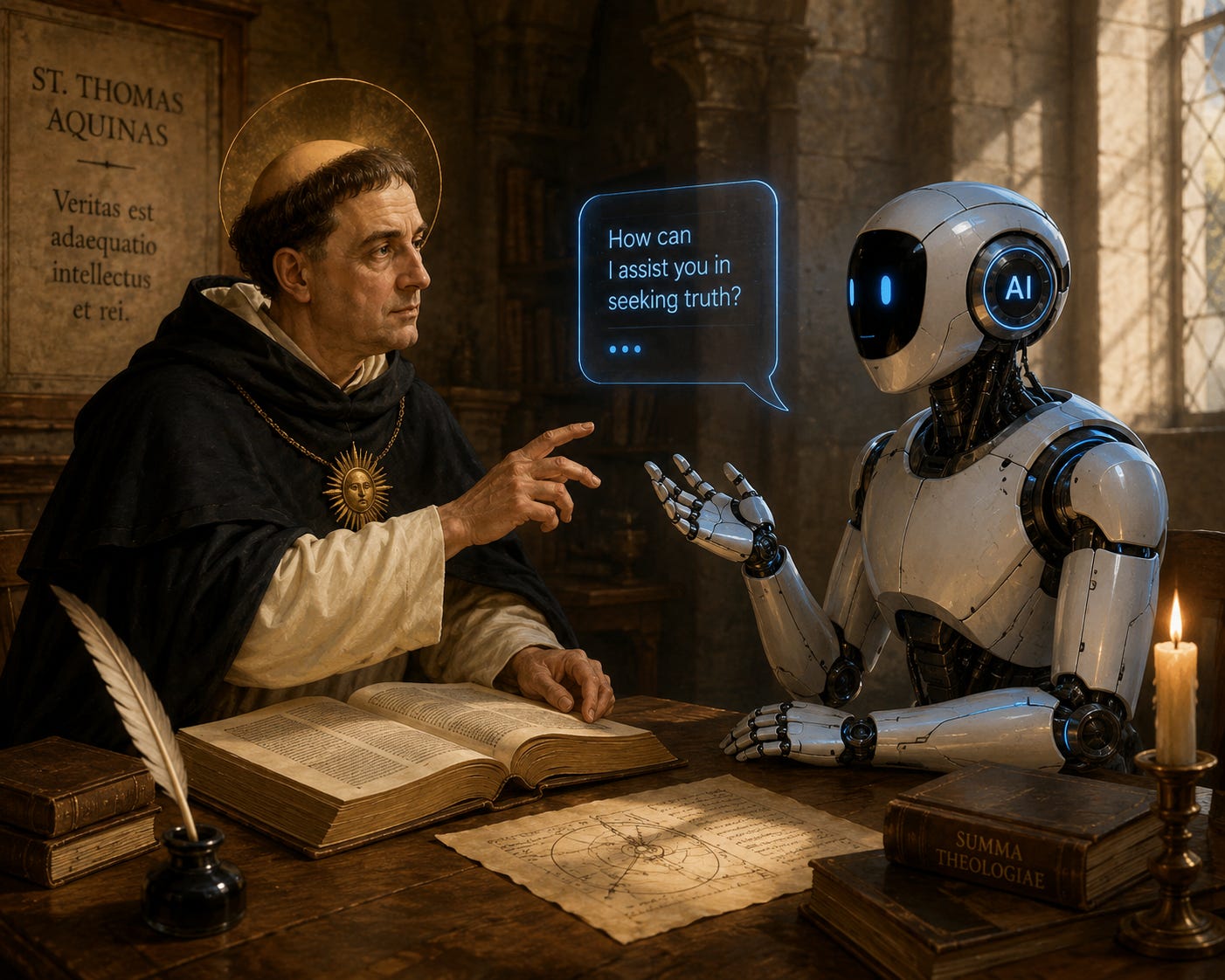
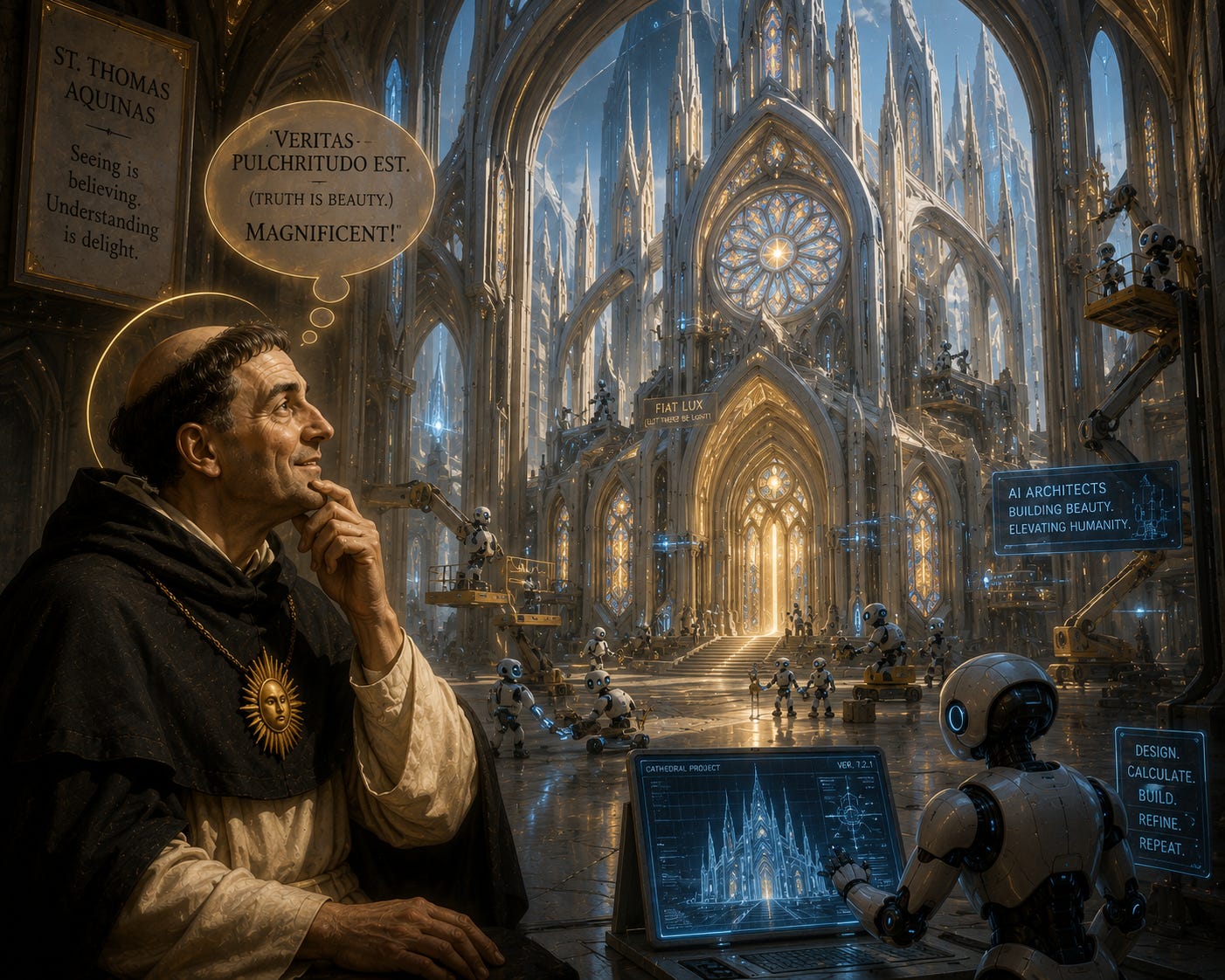
This is where the old phrase attributed to Saint Thomas becomes newly relevant: seeing is believing.
Not because a prototype proves that the future is inevitable. It does not.
But because seeing turns an argument into a conversation. It gives people something to challenge, improve, secure, regulate, and ultimately adopt.
AI Is an Amplifier, Not a Substitute for Judgment
There is a necessary warning here.
The current evidence does not support the lazy claim that AI automatically makes every team faster, smarter, or more innovative.
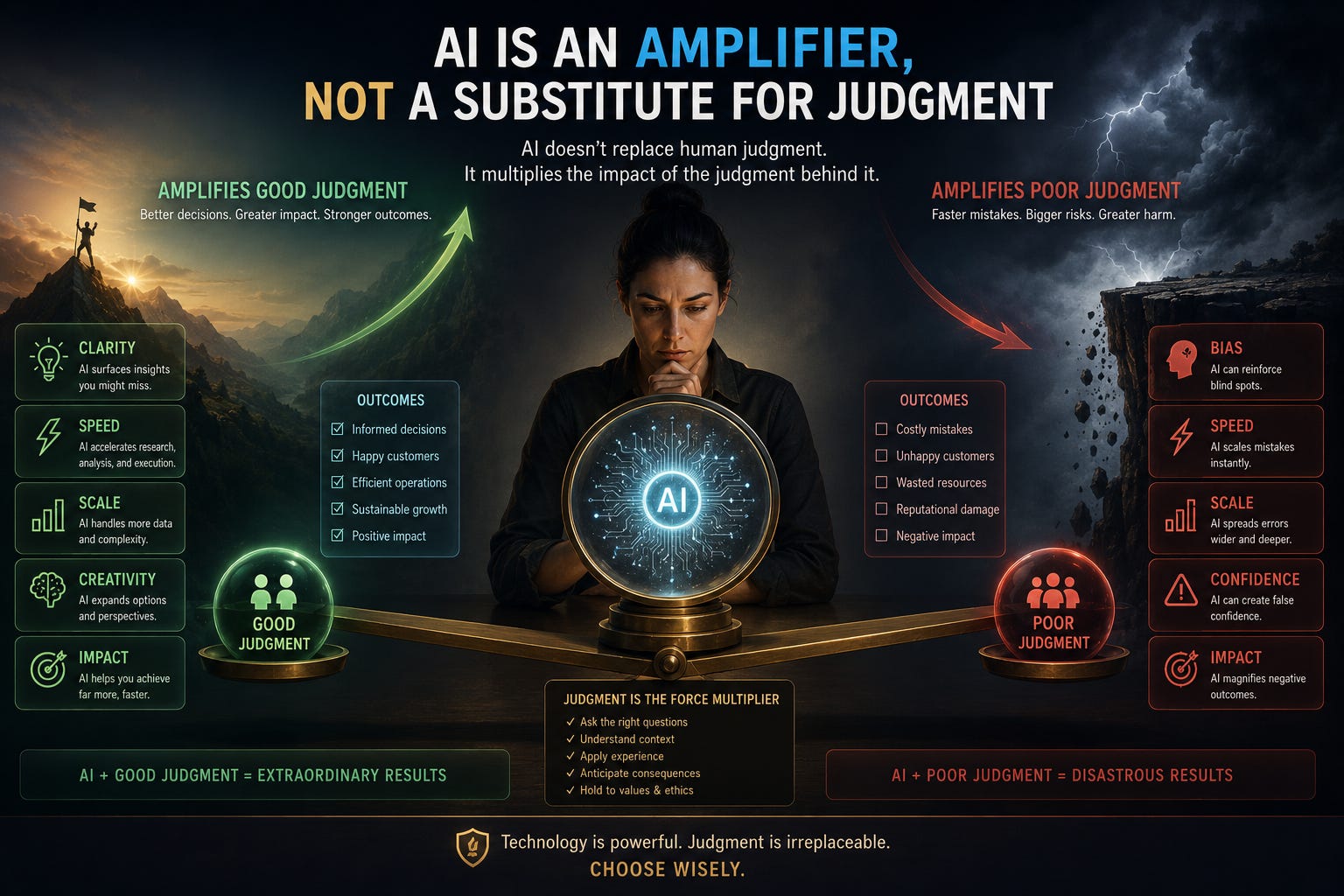
Google’s 2025 DORA research, based on nearly 5,000 technology professionals, describes AI primarily as an amplifier: it magnifies the strengths of healthy organizations and the weaknesses of unhealthy ones. A team with clear architecture, good engineering practices, strong internal platforms, and accountable leadership can compound its advantage. A team with unclear ownership, fragile systems, and poor decision-making can simply create chaos at a higher velocity. (Google Research)
That distinction matters enormously in fintech.
You can now build a payment workflow faster. You can also build a faster path to reconciliation failures, privacy mistakes, model risk, security gaps, and customer confusion. The ability to generate code or prototypes does not remove the need for controls. It raises the premium on them.
The research is also usefully humbling. A randomized study by METR found that experienced developers working in familiar open-source codebases took longer when using early-2025 AI tools, even while many believed they had become more productive. That is not an indictment of AI. It is a reminder that new tools have learning curves, review costs, and task-specific limits. (Metr)
The point is not that AI eliminates expertise.
The point is that expertise becomes even more valuable because someone must know what to ask for, what to trust, what to reject, and what to ship.
From Roadmaps to Living Proof
For leaders, the practical implication is simple.
Do not use AI merely to produce more documents about the future.
Use it to make the future inspectable.
Build the customer journey. Generate the prototype. Run the simulation. Create the exception flow. Test the controls. Put the model in front of the people who will have to operate it. Let risk, legal, engineering, operations, and customers break it before the market does.
The organizations that win will not necessarily be the ones with the most AI licenses.
They will be the ones that turn insight into evidence fastest.
That is a different muscle from traditional planning. It requires curiosity, judgment, comfort with iteration, and enough humility to let a rough prototype teach you something your beautiful strategy document did not.
It also requires leaders to reward learning speed, not just delivery speed.
Because the future is no longer waiting politely at the end of a five-year roadmap.
It is arriving in fragments, every day, in prototypes, agents, models, and workflows that can be tested before the skeptics have finished asking for the deck.
For someone who spent years trying to accelerate the future, this is both exhilarating and slightly unfair.
The younger version of me would have loved it.
The current version of me is simply trying to remember where the steering wheel is.
But perhaps that is the real opportunity.
We no longer need to wait years to prove that a vision deserves belief.
We can build it, show it, challenge it, and improve it in real time.
And then, as Saint Thomas might have said, after asking for a demo environment, a security review, and a clean audit log, seeing becomes believing.
No more pointless brainstorming?? What a relief!